Cold Storage Temperature Monitoring: From Alarms to Records
Cold rooms tend to fail when no one is watching. Using the three moments when things most often go wrong, this article shows how temperature sensing, the door and record-keeping come together in one system that raises its own alarms and keeps its own log.
Each clip shows a common pain point and how it is solved once our monitoring system is in place.
01
Over-temperature at night, and no one knows
BEFORE
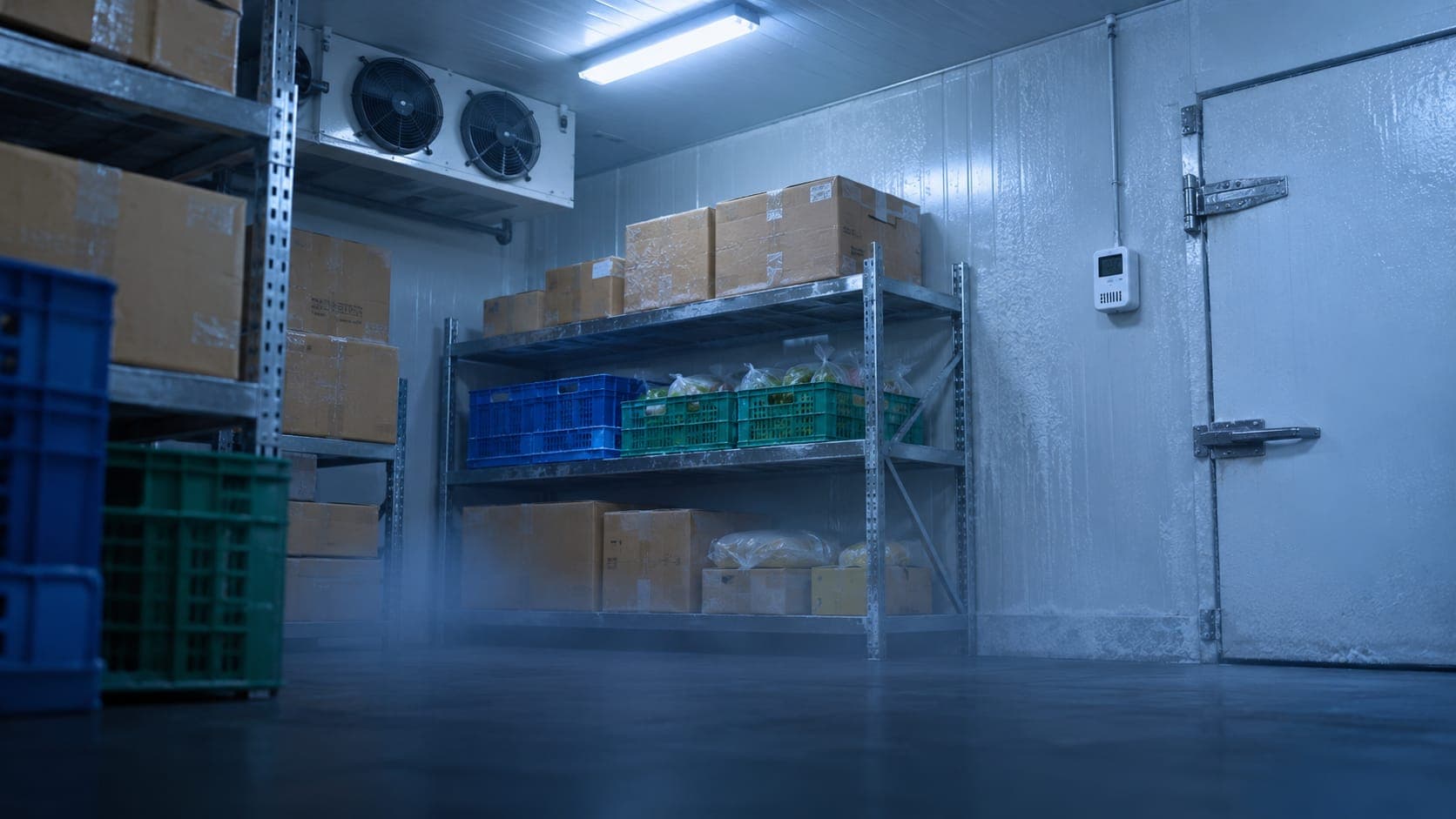
With no one on the night shift, a temperature problem or an urgent settings change means someone has to go on site, and often nobody notices until the next morning.
AFTER
If the temperature stays above the limit for longer than the set time, your phone is notified and the on-site siren sounds.
02
A door left ajar, and no one notices
BEFORE
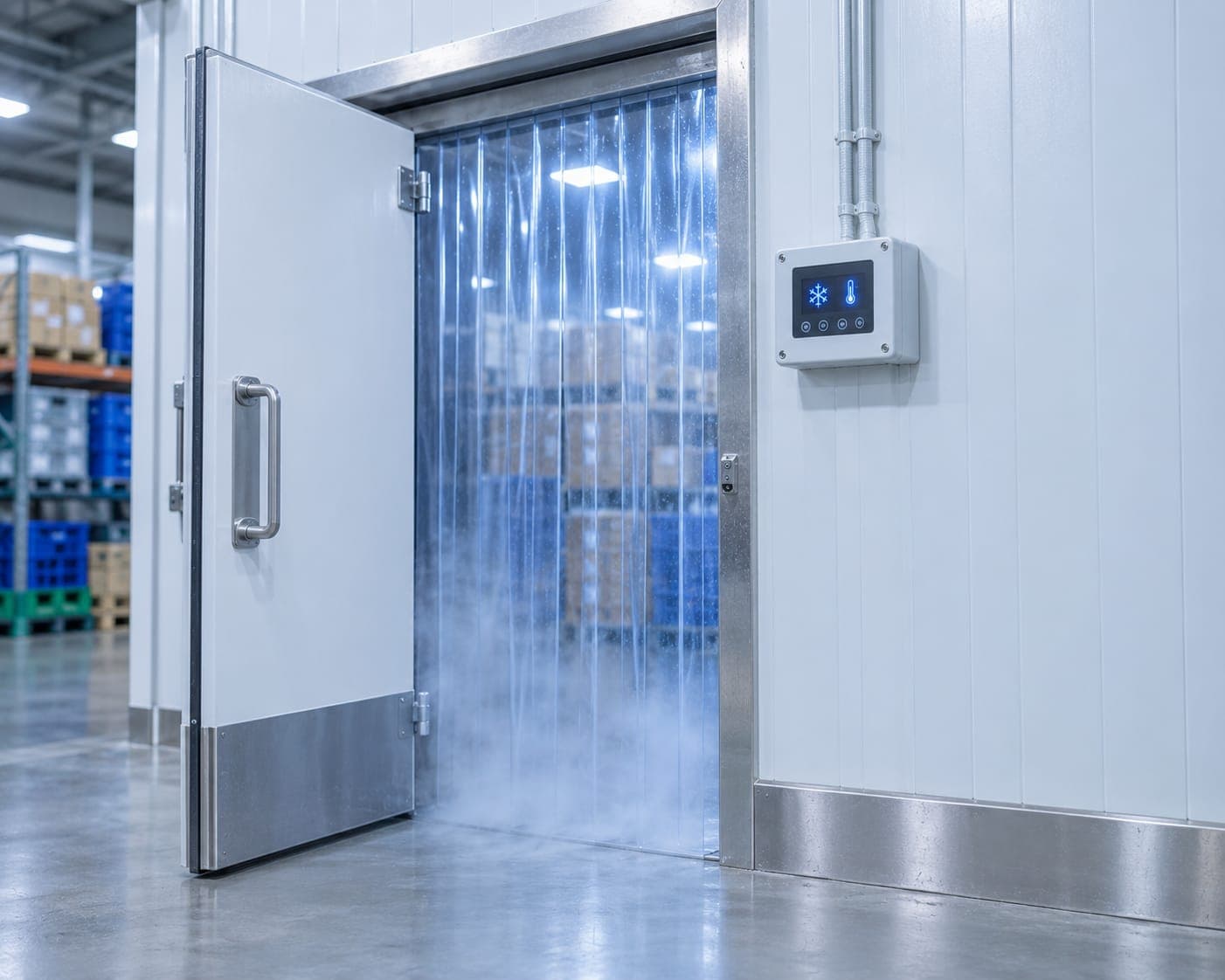
Cold air leaks through the gap and the temperature creeps up slowly, so it usually goes unnoticed until the room is already too warm.
AFTER
A timer starts as soon as the door opens. If it stays open past the set time, the alarm sounds before the temperature starts to rise.
03
The network drops, the log keeps going
BEFORE
When records only exist once they reach the network, every outage leaves a gap.
AFTER
The device logs data in real time and keeps recording through network outages; the full log can be exported once the connection is back.
ARCHITECTURE
System architecture and devices
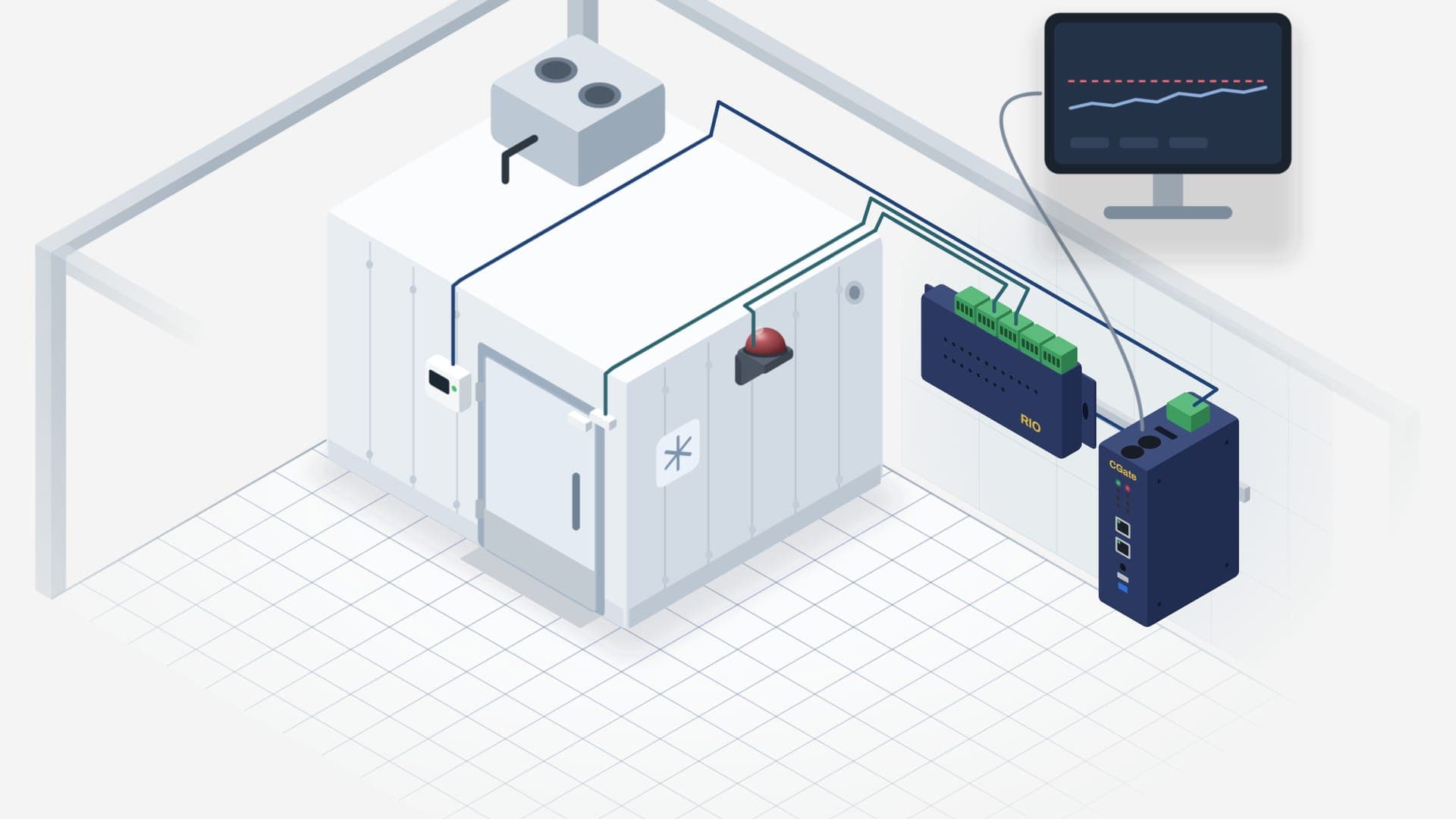
Behind all three moments is one system: the sensor and door contact send in their signals, the RIO I/O controller receives them and handles the control signals, and CGate keeps a long-term log and passes the data on to the monitoring PC and phone.
Temperature & humidity sensorModbus RTU/TCP
Door contactOpen/closed signal wired to RIO DI
On-site sirenLight-and-sound alarm driven by RIO DO
No wired network on site? Notifications go over cellular
Optional on CGate-05/06
FAQ
Questions before you start
Q.01 /Can an existing cold room be retrofitted?
Yes. Just add sensors and a gateway to the existing room; there is no need to rebuild it.
Q.02 /What kinds of sites is it suited to?
Chilled rooms, freezers and cold-chain warehouses. Whether you have one room or several, the Gateway and RIO setup is planned around the number of sensing points.
Q.03 /Which sensors can be connected?
Standard Modbus RTU/TCP sensors connect directly; points are set up from the sensor’s register map. Sensors with analog (current/voltage) output connect through a RIO AI module.
Q.04 /Can alerts go to LINE?
Built-in notifications go out by email. LINE can be set up to your requirements, including what each message contains.
Q.05 /What if the network goes down?
Recording continues on site, and the full log can be exported once the network is back. Sites without a wired network can add the 4G option.
TAILORED TO YOUR SITE
Every cold room is different
Sensor types, alarm conditions and notification methods (such as LINE) can all be customized to your site. Tell us about your cold room and our sales team will help you plan it.